

Can you sell a house with polybutylene pipes in Florida?
Yes. You can sell a Florida house with polybutylene pipes, as-is or after a repipe. The real hurdle is insurance: Citizens Property Insurance's published rules say a home over 20 years old with polybutylene piping can't get a new Citizens policy, and mortgage lenders generally require homeowners insurance. So a buyer who needs a loan often can't close until the pipes are replaced.
That leaves three paths: repipe and then sell, list it as-is for cash buyers, or ask us for a cash offer and compare.
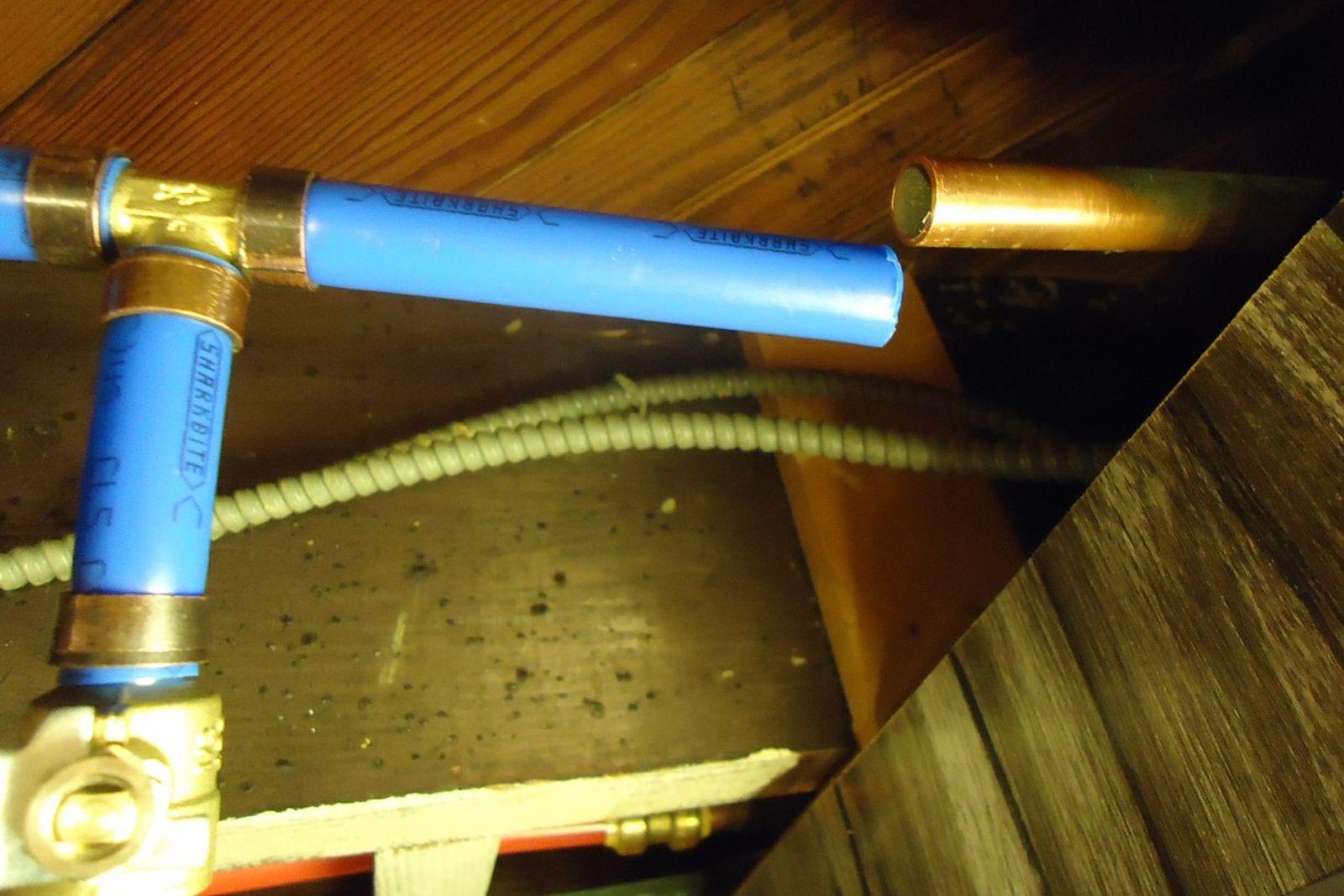
What is polybutylene, and how do you know if you have it?
Polybutylene (often called "poly" or "PB") is a flexible plastic water supply pipe. InterNACHI, the home inspectors' association, says it was made from 1978 to mid-1995 and went into as many as 10 million U.S. homes.
How to spot it:
- Color. Most often gray, but it can also be white, silver, black or blue.
- The stamp. Look for "PB2110" printed on the pipe.
- Where to look. Near the water heater, at the water meter, at the main shut-off valve, and where pipes come out of the wall to feed sinks and toilets.
Don't go by color alone. Newer PEX pipe is flexible plastic too and is often blue, red or white, and some black or white pipe is polyethylene or PVC. If you're not sure, a licensed plumber or home inspector can tell you in one visit.
Why it's a problem. InterNACHI says certain disinfectants in water can react with polybutylene and make it flake apart, and that most leaks show up at the joints and fittings. Pipe behind drywall can leak for a while before anyone sees it.
Lots of houses in Port Charlotte, Sarasota, Bradenton, Tampa, Lakeland, Orlando, Kissimmee and Jacksonville were built in the 1980s and early 1990s, the same years polybutylene was in use. If your house is from that era and has never been repiped, it's worth checking.
Can you get homeowners insurance with polybutylene pipes in Florida?
It's hard, and that's what makes these houses tough to sell to a buyer with a loan.
Citizens. Citizens Property Insurance Corporation is Florida's state-created insurer, often the fallback when private companies say no. Its eligibility rules for homeowners policies (effective February 2022) say new-business risks over 20 years old with polybutylene piping are not insurable by Citizens. Every house built in the polybutylene years is now past that 20-year mark.
The 4-point inspection. Citizens requires a four-point inspection for homes more than 20 years old. A Florida-licensed inspector checks the roof, electrical, plumbing and heating and cooling, and reports the age, type and condition of each. Because the plumbing type goes on that report, polybutylene usually comes up as soon as a buyer shops for coverage.
Private insurers set their own underwriting rules. Ask your insurance agent what your company accepts, and whether your renewal is at risk. Rules change, so get the current answer from an agent rather than relying on this page.
Why it matters for selling: the Consumer Financial Protection Bureau says lenders generally require proof of homeowners insurance. A buyer who can't insure the house usually can't get the loan.
Does polybutylene have to be replaced?
No law makes you replace it. InterNACHI notes that no regulations require it. In practice, though, the insurance rules above push most owners and buyers toward a repipe.
What a repipe involves. A plumber runs new supply lines (usually PEX or copper), opens walls or ceilings where needed, and patches them after. Angi's cost guide puts a whole-house repipe at about $1,500 to $15,000, with $7,500 as a typical figure, and says it takes a few days for a small home to several weeks for a large one. Your house could land anywhere in that range, so get written bids from licensed plumbers and ask whether permits and drywall repair are included.
The class action. In November 1995, a state judge in Union City, Tennessee approved a $950 million settlement (Cox v. Shell) funded by Shell Oil and Hoechst Celanese for homeowners with polybutylene leaks. The claim filing deadline expired in 2009, so it won't pay for a repipe today.
Do you have to disclose polybutylene pipes when you sell?
In Florida, the state Supreme Court held in Johnson v. Davis, 480 So. 2d 625 (Fla. 1985), that a home seller who knows of facts that materially affect the value, which the buyer can't readily see and doesn't know, has a duty to disclose them. Polybutylene that affects insurability can fit that description, and much of it sits hidden inside walls.
If you know the house has it, tell the buyer in writing. If it was partly repiped, say which parts. For questions about your situation, talk to a Florida real estate attorney.
Your options for a house with polybutylene pipes
| Option | What it takes | Often a fit when |
|---|---|---|
| Repipe, then list with an agent | Plumber bids, permits, wall repairs, then time on the market, commissions and closing costs | The rest of the house is in good shape and you have the time and money |
| List as-is with an agent | Disclose the pipes, price for it, and find a cash buyer or one who will repipe | The area is in demand and you can wait |
| Sell as-is to Big Buck Offers | Tell us the address and what you know about the plumbing | You don't want to manage a repipe or wait on a buyer's insurance |
To be fair about it: if the house is in good shape and you have time, repiping and listing can bring a higher price. Compare what you'd actually walk away with after the repipe, commissions, closing costs, repair requests after inspections and months of payments. When you sell to us, there are no repairs, no fees and no commissions, and we pay the closing costs.
If the house has other problems too, see what to do when you can't sell your house. Selling an inherited house or one with tenants? We buy those as-is too. Local pages: Port Charlotte, Sarasota, Tampa, Orlando and Jacksonville.
How selling to us works
- Tell us about the house. Use the form on this page or call 1-844-348-9268.
- Get a cash offer, usually the same day we have the property details.
- Pick your closing date, as soon as 7 days or on the date you choose.
We buy as-is, so the pipes stay where they are. You can leave the contents behind, too.
FAQ
How do I know if my house has polybutylene pipes?
Look for flexible plastic pipe, most often gray, stamped "PB2110," near the water heater, the water meter, the main shut-off or under sinks. Houses built from about 1978 to 1995 are the most likely to have it. A plumber or home inspector can confirm.
Will Citizens insure a house with polybutylene pipes?
Citizens' published eligibility rules say a home over 20 years old with polybutylene piping isn't insurable for a new Citizens policy. Ask an insurance agent for the current rules before you count on any policy.
Do I have to replace polybutylene pipes before selling?
No. You can sell as-is. But a buyer who needs a mortgage usually needs insurance, so many buyers will ask for a repipe, a lower price, or won't be able to close.
How much does it cost to repipe a house in Florida?
Angi's national cost guide puts a whole-house repipe at about $1,500 to $15,000. The size of the house, the number of bathrooms, the pipe material and wall repairs all move the price, so get bids from licensed plumbers.
Do you buy houses with polybutylene pipes?
Yes. We buy as-is in Port Charlotte, Sarasota, Bradenton, Tampa, Lakeland, Orlando, Kissimmee, Jacksonville and nearby, with no repairs and no commissions, and we pay the closing costs.
This page is general information, not legal or insurance advice.